
Articles · Updated
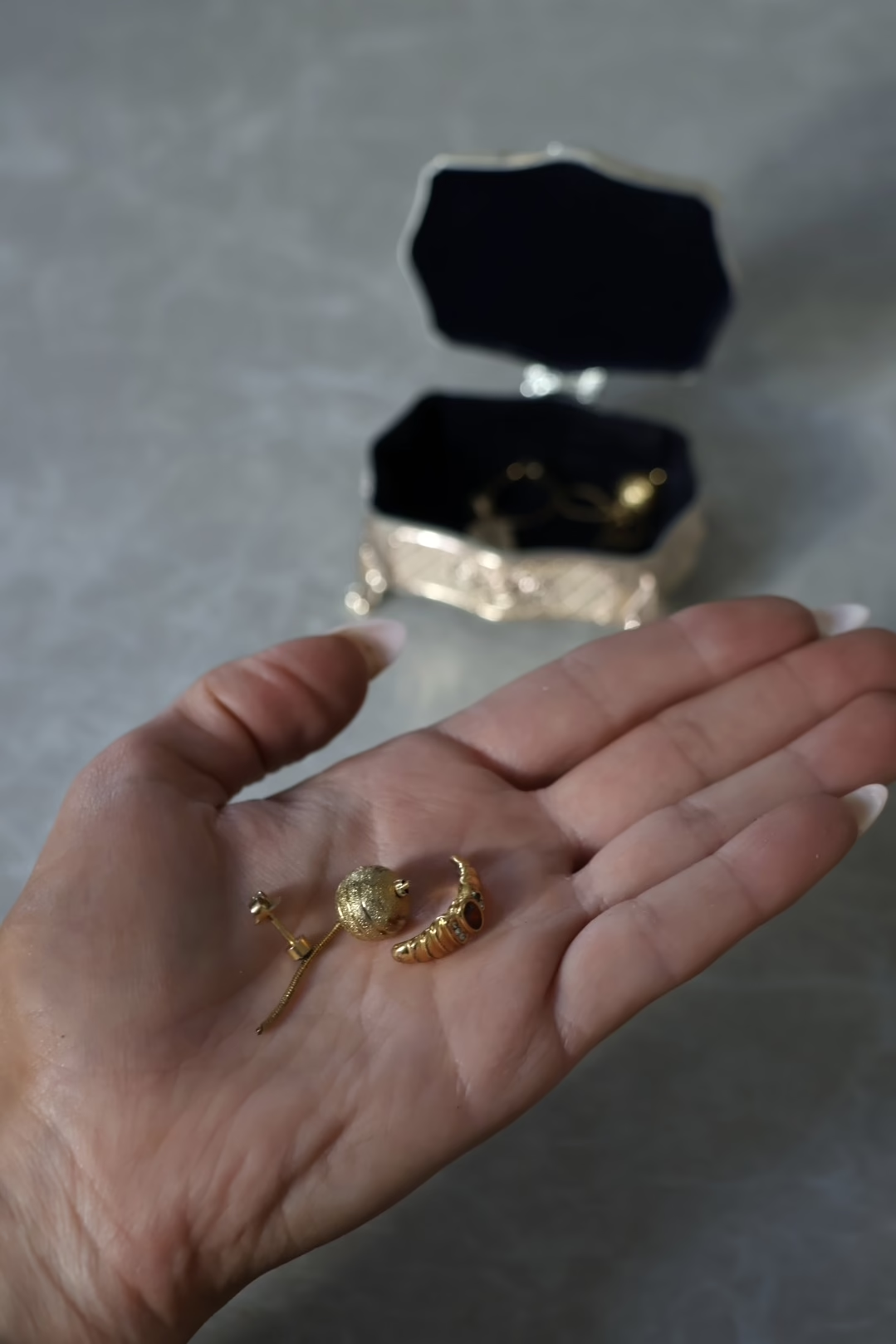
Most of us have a few pieces in a drawer that we’re not sure about: a chain that came from a market stall, a ring that was a gift, earrings inherited from a grandmother. Are they real gold? You can find out quite a lot at home – as long as you know what each check can and can’t tell you.

Start with the hallmark
In Ireland, gold, silver, platinum and palladium items must be assayed and hallmarked before they’re sold, and there’s no exemption for very light pieces. An Irish hallmark struck at the Assay Office in Dublin Castle has three compulsory parts: a sponsor’s mark (the maker’s or company’s initials), the Hibernia figure, and a fineness mark showing the gold content in parts per thousand. You’ll usually find it inside a ring band, on the clasp of a chain or on the back of a pendant.
Jewellery bought abroad may carry a foreign hallmark or an international convention mark instead – a small set of scales next to the fineness number. Those are also valid in Ireland.
The fineness mark: how much is pure gold?
375
585
750
916
999
585
750
916
999
375 = 9ct, 37.5% gold
585 = 14ct, 58.5%
750 = 18ct, 75%
916 = 22ct, 91.6%
999 = 24ct, pure gold
585 = 14ct, 58.5%
750 = 18ct, 75%
916 = 22ct, 91.6%
999 = 24ct, pure gold
Everyday jewellery is rarely 24ct, because pure gold is very soft. It’s mixed with other metals to make it hard-wearing, which is why 9ct, 14ct and 18ct are the purities you’ll see most often. A missing or worn mark doesn’t automatically mean a piece is fake: marks wear down over decades, very old pieces were sometimes never marked, and resized rings can lose them.
Marks that point to plating, not solid gold
Some stamps look official but actually tell you the piece is only coated with gold. If you see one of these, the piece is very likely gold-coloured metal with a thin gold layer:
Three simple checks at home – and their limits
If there’s no clear hallmark, these checks can give you a hint. None of them damages your jewellery, and none of them is proof on its own.
Please don’t try scratching, biting or home acid kits. They can leave marks on your jewellery and are easy to misread – a professional touchstone test needs only a tiny streak on a stone.
Signs that don’t mean your gold is fake
Some things look worrying but are perfectly normal for real gold:
Also remember that real gold doesn’t have to be 24ct to be worth checking. A 9ct ring contains real gold, even though less of it is pure.
Still not sure? Ask a Gold Expert
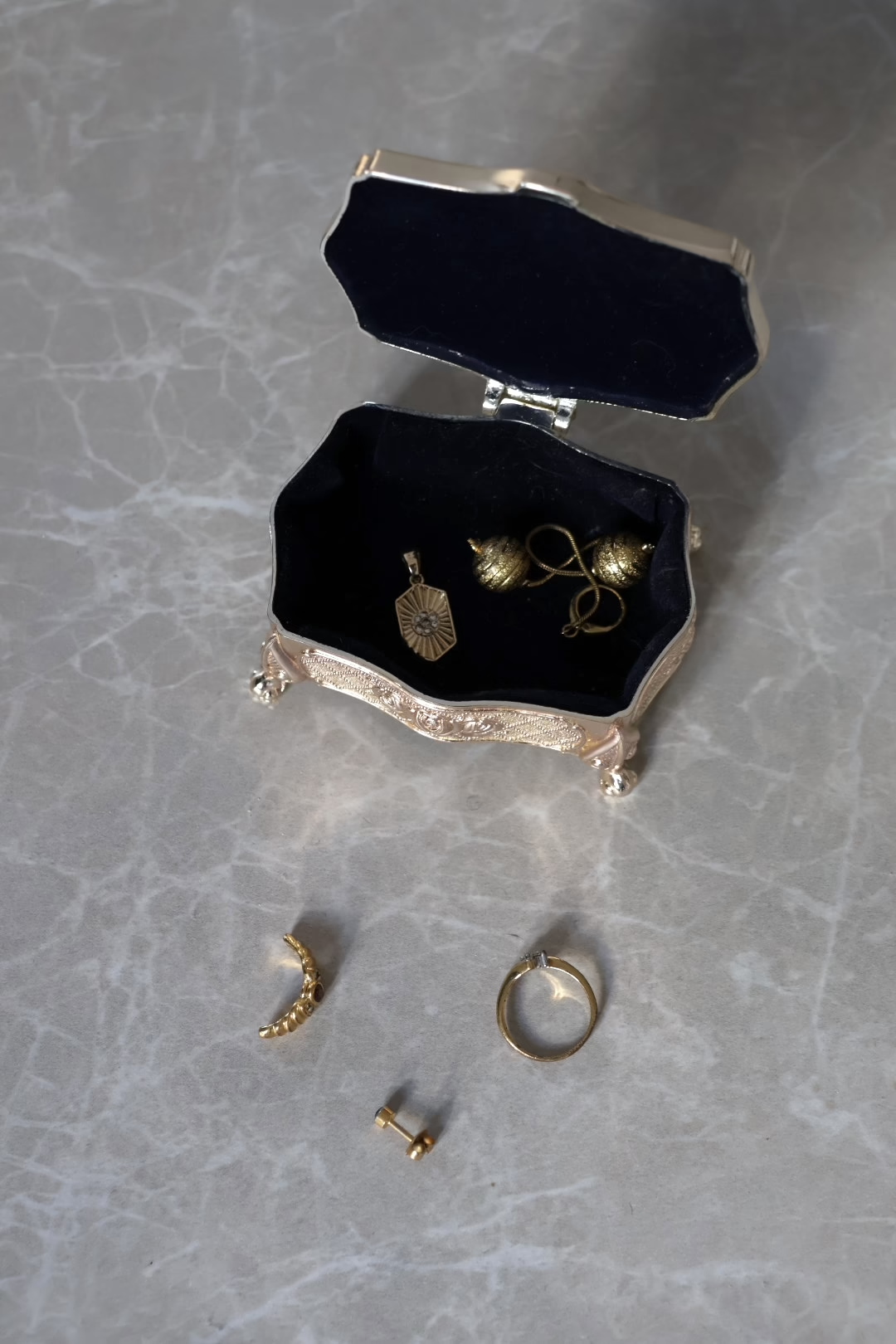
The quickest way to a clear answer is a free valuation. Bring everything you’re unsure about, including pieces you suspect are plated. At a local stop, a gold expert checks the hallmarks, tests anything unmarked and weighs your gold on a scale turned towards you – in a private appointment of about 15 minutes.
The valuation is non-binding: you decide afterwards whether to sell anything. If you do, payment is made by bank transfer no later than the fifth banking day, and we never pay in cash. See what happens during a gold valuation, step by step.
Frequently asked questions about real gold
Does real gold stick to a magnet?
No, gold isn’t magnetic. But many fake metals aren’t either, so passing the magnet test doesn’t prove a piece is real.
What does 375 on my ring mean?
It’s the fineness mark for 9ct gold: 375 parts per thousand, or 37.5%, is pure gold. The rest is other metals that make the ring harder-wearing.
Can real gold turn dark?
Pure gold doesn’t, but lower-carat gold such as 9ct can tarnish because of the other metals in it. A darker surface alone isn’t a sign of fake gold.
My jewellery has no hallmark. Is it fake?
Not necessarily. Marks wear off, old pieces were sometimes unmarked, and resizing can remove them. A test is the only reliable way to know.
Can I bring items I’m not sure about to a valuation?
Yes. Sorting real gold from plated or costume pieces is part of the valuation. It’s free, and you don’t have to sell anything.
Sources
- Assay Office Ireland: Compulsory hallmarks
- Assay Office Ireland: Hallmarking legislation
Checked 12 October 2026.


