Articles · Updated
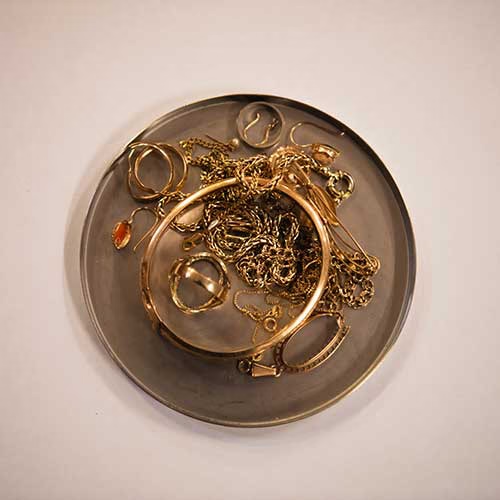
Many of us have gold we no longer wear: a chain from years ago, a ring that doesn’t fit, earrings without a partner. Selling it can feel like a big step, especially if you’ve never done it before. This guide walks you through it calmly, from sorting what you have to understanding the price, so you know what to expect and can decide in your own time.

Before you sell: sort what you have
Start by gathering everything in one place. Look inside rings and near clasps for a hallmark. In Ireland, gold sold as gold must carry a hallmark, normally a sponsor’s mark, the Hibernia mark and a fineness number such as 375 for 9ct or 750 for 18ct. Our guide to Irish hallmarks and simple checks at home shows what to look for.
Don’t leave anything out just because it’s broken, tarnished or has no visible mark. Marks wear away, and older or foreign pieces can be marked differently. Put aside anything that matters to you or your family. It’s always easier to keep something than to wish you had.
There’s no need to clean or polish anything first. Dirt and tarnish don’t change the gold content, and scrubbing can scratch a piece you might decide to keep.
Bring along
- All the gold you’re unsure about, not just the obvious pieces
- Broken chains, single earrings and loose clasps
- Any stones that have come loose from a setting
- Your bank details and a picture ID, in case you decide to sell
How the price is worked out
Gold jewellery is valued on three things: how much it weighs, how much of it is pure gold, and the gold price on the day. The carat tells you the gold share. 9ct is 37.5% gold, 14ct is 58.5%, 18ct is 75% and 22ct is about 91.6%. The rest is other metals that make the piece stronger.
Example in grams
A 10 g chain in 9ct contains 3.75 g of pure gold. A 10 g chain in 18ct contains 7.5 g. Same weight, twice the gold. That’s why each carat is weighed separately.
The gold price you see quoted online is for pure gold traded in large amounts. Old jewellery has to be tested, melted and refined before it can be used again, and that costs money. So any buyer’s offer will be below the market price. What matters is that you can follow how the offer was reached: the weight on the scale, the test result for each piece, and how the day’s price was used.
What to look for wherever you sell
In Ireland you can sell gold in several ways: in a shop, by post, or at a booked appointment. Whichever you choose, a few simple things make the difference between feeling unsure and feeling in control. Think of them in three parts.
What you should see
Your gold in sight the whole time. A scale with the display facing you. Each piece tested in front of you, not taken to a back room.
What you should hear
A plain explanation of the weight, the carat of each piece and how the offer relates to the gold price. Questions answered without hurry.
What you decide
Whether to sell at all, and which pieces. You should be free to take everything home and think it over.
It also helps to know how you’ll be paid and when, and to get a written receipt that shows what you sold. If you post your gold away, ask how it will be insured and what happens if you don’t accept the offer. If anything feels rushed, it’s fine to say you’d like time to think.
You’re also free to get more than one valuation before you decide. Write down the weight and carat you were told for each piece, so you can compare like with like. A buyer who explains the numbers clearly will be happy for you to take that time.
Selling at a local Gold Arthur stop
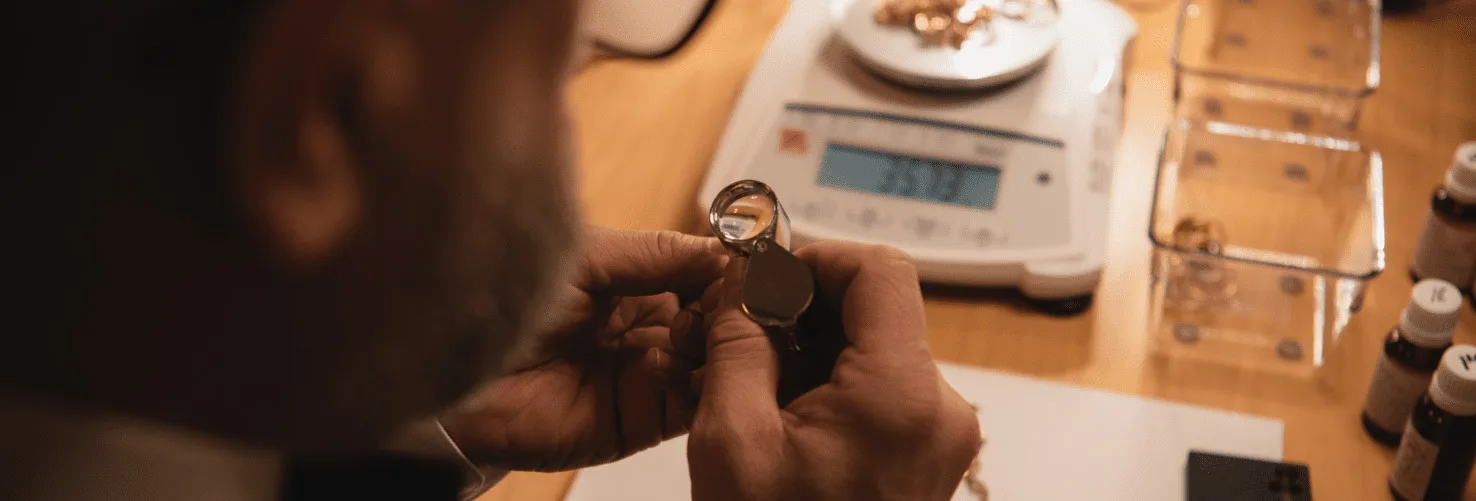
Gold Arthur travels to local stops around Ireland, so you don’t need to go into the city or post anything. You book a free, private appointment that takes about 15 minutes. There is no minimum amount, so a single ring is just as welcome as a full jewellery box.
The expert weighs your gold on a verified scale that faces you and tests it in front of you, usually on a touchstone with a small drop of acid on the streak rather than on the piece itself. You then hear how the weight, the carat and the day’s gold price add up to the offer. Every step is described in our article on what happens at a gold valuation.
If you decide to sell, you receive a receipt by SMS and e-mail, and the payment goes to your bank account no later than the fifth banking day. We never pay in cash. If you’d rather not sell, you simply take everything home with you.
Broken, unusual and stone-set pieces
A broken piece holds just as much gold as it did before it broke, so it’s valued the same way. You can read more in our article on whether broken gold is worth anything. Stones aren’t gold, so they’re either removed with your permission or their weight is deducted. If a piece is by a known designer or is a genuine antique, it may be worth more as jewellery than as gold, and it’s a good idea to also ask a jeweller before you decide.
Gold-coloured items aren’t always solid gold. Pieces marked GP, RGP or HGE, or silver marked 925 with a gold colour, are plated, with only a thin layer of gold on the surface. If you’re not sure what something is, bring it along and the test will show it.
Do you pay tax when you sell gold in Ireland?
For most people selling a few pieces of old jewellery, this means no tax to pay, but every situation is different. This is general information, not tax advice. Gold Arthur doesn’t give tax advice, so check Revenue’s guidance or ask an accountant if you’re selling higher-value items.
Frequently asked questions
Is there a minimum amount of gold I need to bring?
No. You’re welcome to bring a single ring or earring.
Will I be paid in cash?
No. Payment goes to your bank account no later than the fifth banking day after the sale.
Does the test damage my jewellery?
The piece is rubbed lightly on a touchstone in a discreet spot and the acid goes on the streak on the stone, not on your jewellery. It doesn’t change the gold content.
Can I sell only some of my pieces?
Yes. You choose which pieces to sell and which to keep, after you’ve heard the offer.
Do I have to sell if I book?
No. The valuation is free and there’s no obligation to sell. Sell only if you want to.
Sources
Information checked on 27 October 2026.