
Articles · Updated
Handing your gold to someone you’ve never met can feel uncomfortable, especially if you don’t know what they’re going to do with it. How is it weighed? Is it tested? What happens to the stones? And do you have to sell at the end? This guide walks you through a Gold Arthur valuation step by step, so you know exactly what to expect before you arrive.
Before you come: what to bring

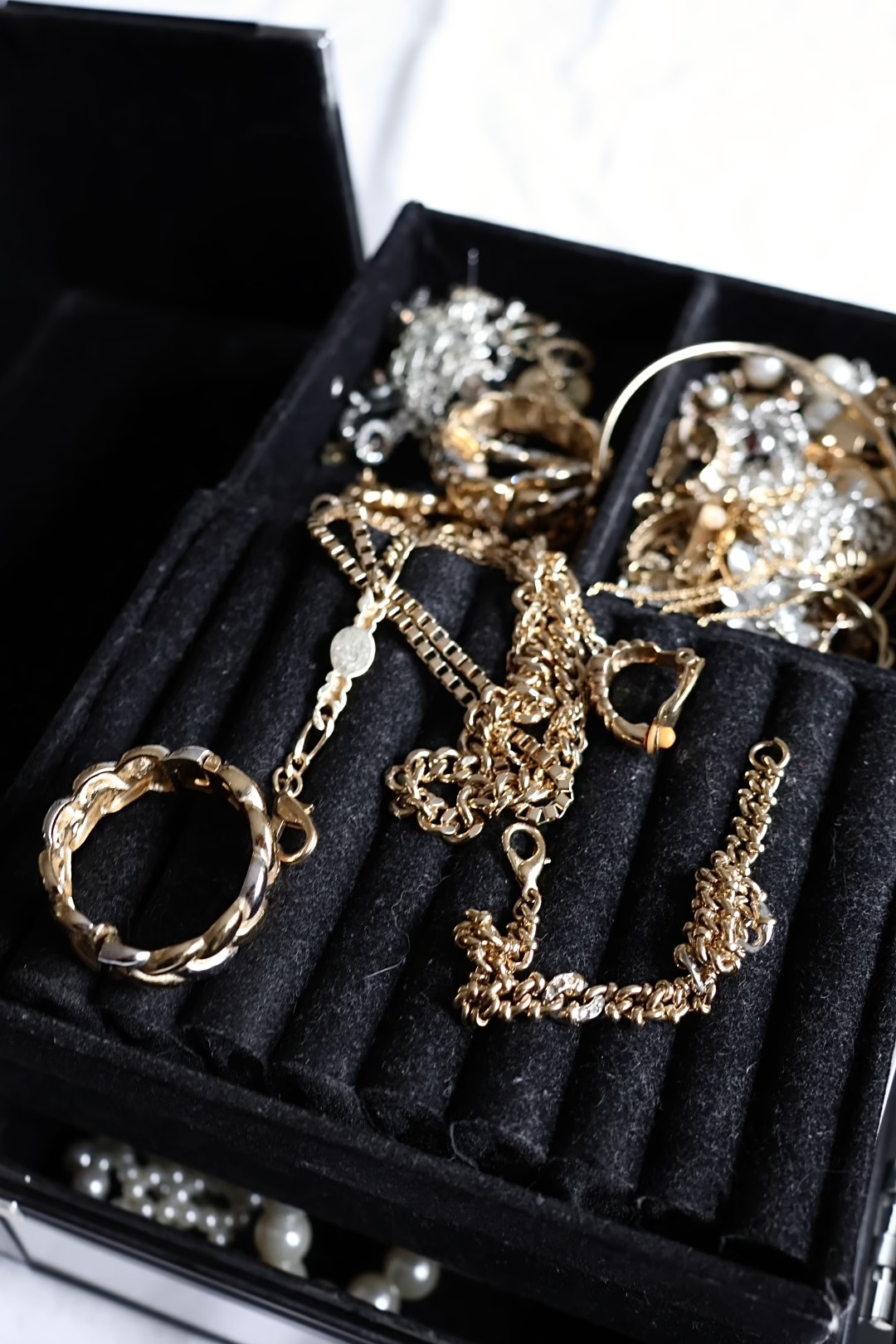
Bring anything you’d like checked, even if you’re not sure what it is. A box of mixed jewellery often holds a few gold pieces among the costume jewellery, and sorting that out is part of the valuation. There’s no minimum or maximum amount.
Broken chains, single earrings, rings that no longer fit and pieces with missing stones are all welcome. You don’t need to clean anything first.
The appointment is private: just you and one gold expert, with no other customers waiting at the table. It takes about 15 minutes at a local stop in a town near you.
Step 1: Checking the hallmarks
What you’ll see: each piece checked under a loupe
The gold expert starts by looking for marks on each piece, usually inside a ring band or near the clasp of a chain. The marks show what metal the piece is made of and how pure it is. Your items are then sorted into groups by metal and fineness, so each group can be valued correctly.
An Irish hallmark has three compulsory parts
Sponsor’s mark
Initials of the maker or company responsible for the piece.
Hibernia
A seated female figure – the mark of the Assay Office at Dublin Castle.
Fineness mark
Gold content in parts per thousand, such as 375 (9ct), 585 (14ct) or 750 (18ct).
Older Irish pieces may also carry a date letter or a traditional mark, and jewellery from abroad often has a foreign or international convention hallmark instead.
In Ireland, gold jewellery must be assayed and hallmarked before it’s sold, and there’s no exemption for very light pieces. Even so, marks can wear away over the years, and older or foreign pieces are sometimes unmarked. Want to check your own pieces first? Our guide to recognising genuine gold at home explains what to look for.
Step 2: Testing pieces without clear marks
What you’ll see: a touchstone and testing acids
If a mark is missing, worn or hard to read, our gold expert tests the metal. The piece is rubbed lightly against a black touchstone, which leaves a thin streak of metal on the stone. Testing acids are then applied to that streak, not to your jewellery. How the streak reacts shows whether it’s gold and roughly how pure it is.

The rub is done on a discreet spot, such as the inside of a ring or the end of a chain, and only a tiny amount of metal is used. You can watch every part of the test and ask what each result means.
Step 3: Weighing your gold
What you’ll see: the scale’s display
Each group of gold is weighed on a verified precision scale. The scale is always turned towards you, so you can read the weight yourself rather than taking anyone’s word for it.
The value depends on the weight and the purity of the gold, not on the design or condition. A broken chain is valued in the same way as an intact one of the same weight and fineness.

What happens to stones and decorations?
Only the gold is valued. Diamonds, gemstones, pearls and other decorations aren’t included in the offer, so there are two ways to handle them, and you choose:
Option A
Stones removed
With your permission, the stones are taken out before weighing, and you keep them.
Option B
Stones left in
The piece is weighed as it is, and the estimated weight of the stones is deducted from the total.
Step 4: How the offer is worked out
What you’ll see: the calculation explained, group by group
Once every piece has been identified and weighed, our gold expert works out an offer in euro for each group. It’s based on three things: the weight, the purity, and the price of gold on the day. A 9ct chain and an 18ct ring of the same weight therefore get different amounts, because the 18ct ring contains twice as much pure gold.
The offer isn’t the same as the world market price you might see in the news. That price is for pure, refined gold, while jewellery has to be melted down and refined before the gold can be used again. What matters is that you can see how your offer is calculated, and you’re welcome to ask about any part of it.
Step 5: Your decision – with no obligation
A valuation doesn’t mean you have to sell. You can sell everything, sell only some pieces, or take everything home and think it over. If you’d rather not sell, you get all your items back, and you’re welcome to come again another time.
If you choose to sell
- →The money is paid by bank transfer, no later than the fifth banking day.
- →We never pay in cash.
- →You receive a receipt by SMS and e-mail.
Frequently asked questions about gold valuations
Does a gold valuation cost anything?
No. The valuation is free and non-binding, whether you sell anything or not.
How long does it take?
About 15 minutes for most appointments. If you bring a lot of mixed pieces, sorting them can take a little longer.
Will testing damage my jewellery?
The touchstone test uses only a tiny streak of metal, rubbed from a discreet spot, and the acid goes on the stone rather than on the piece. Pieces with clear hallmarks usually don’t need testing at all.
Is broken gold worth less?
No. The offer is based on the weight and purity of the gold, so a broken chain is valued the same as an intact chain of the same weight and fineness.
How and when am I paid if I sell?
By bank transfer, no later than the fifth banking day. We never pay in cash, and you get a receipt by SMS and e-mail.
Sources
- Assay Office Ireland: Compulsory hallmarks
- Assay Office Ireland: Hallmarking legislation
Checked 12 October 2026.


